
JUNE 2026
The first buses powered by renewable hydrogen are now operating in the Cannes area
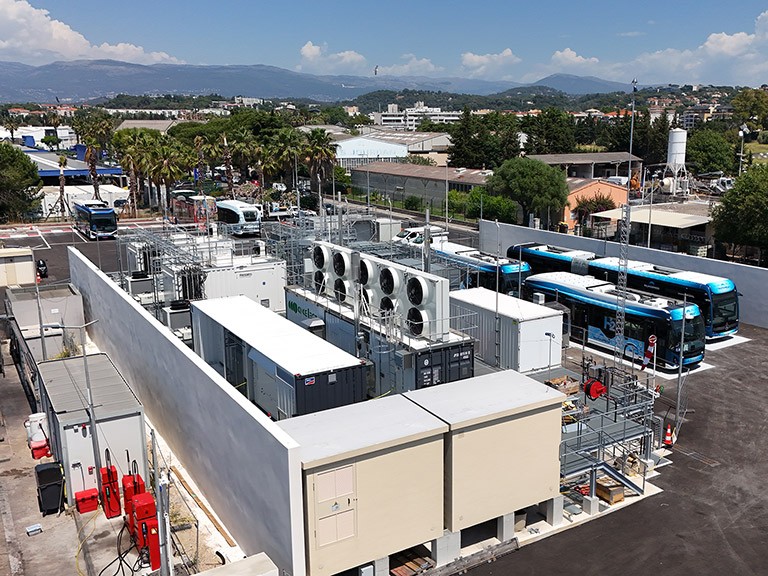
David Lisnard, President of the Cannes Lérins Urban Community and Mayor of Cannes, and Christelle Rouillé, Chief Executive Officer of Hynamics (EDF Group), announced the launch of the first urban station for the production of renewable hydrogen via water electrolysis in the Provence-Alpes-Côte d’Azur region. This concrete programme to decarbonise public transport is being carried out in partnership with the Banque des Territoires and SEM Green Energy 06, and is co-funded by ADEME, the European Union (CINEA) and the Provence-Alpes-Côte d’Azur Region. It will power a total of 41 renewable hydrogen buses in the Cannes area, providing cleaner and quieter transport for the benefit of residents and the environment.
Challenges & Perspectives
The Communauté d'Agglomération Cannes Pays de Lérins, alongside Banque des Territoires, GREEN Energy 06 and Hynamics, has chosen to develop low-carbon hydrogen mobility, helping to create a new economic model at the cutting edge of innovation and energy efficiency. The Project Company, made up of the four partners, will install and operate a hydrogen production and distribution station using water electrolysis in Cannes. These production and distribution units will enable the 41 hydrogen-powered buses of the Communauté d'Agglomération to be supplied with low-carbon hydrogen by the end of 2025.
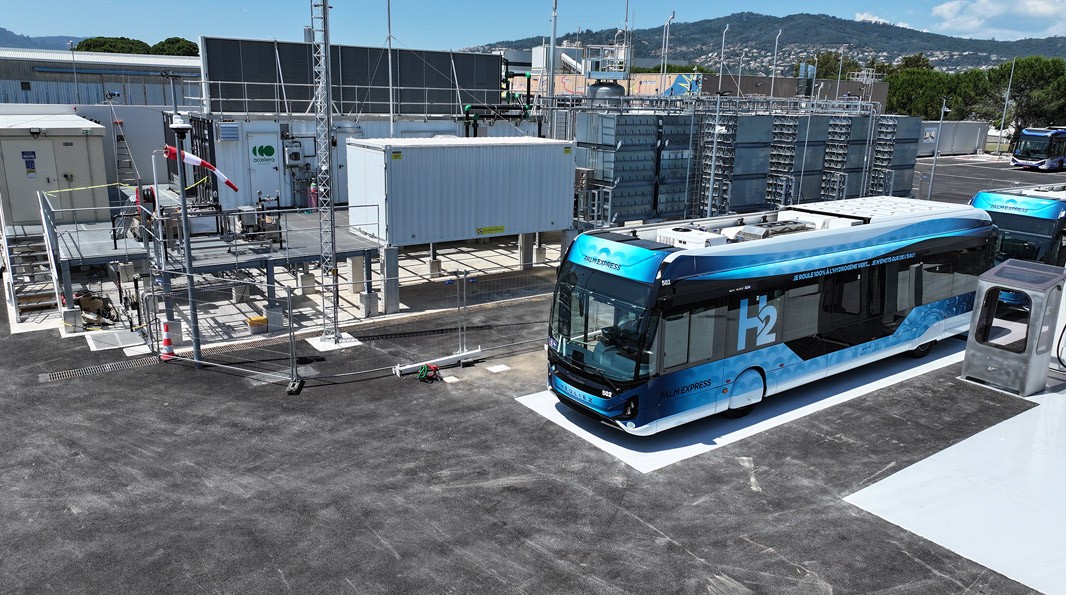
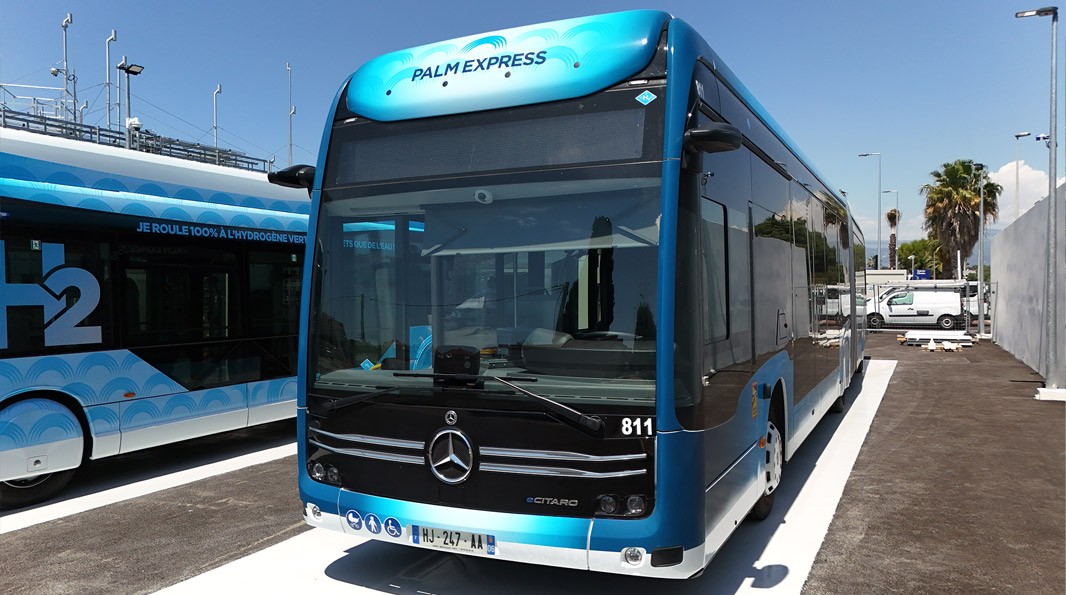
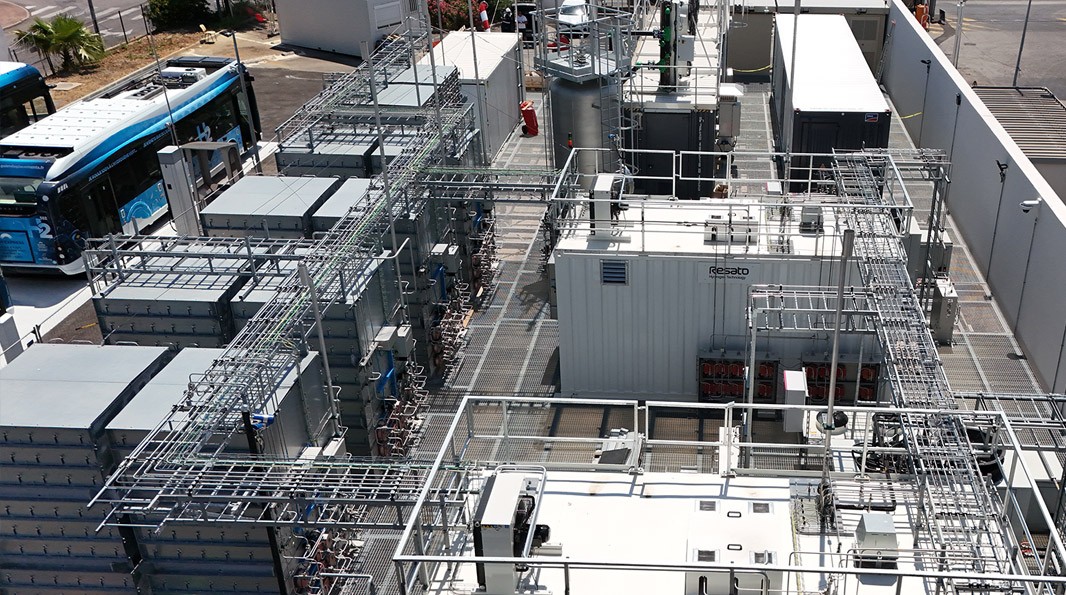
Some photos of the project
Our key figures
-

Electrolysis
-

Hydrogen produced per day
-

Hydrogen bus
-

Tons of CO₂ avoided per year
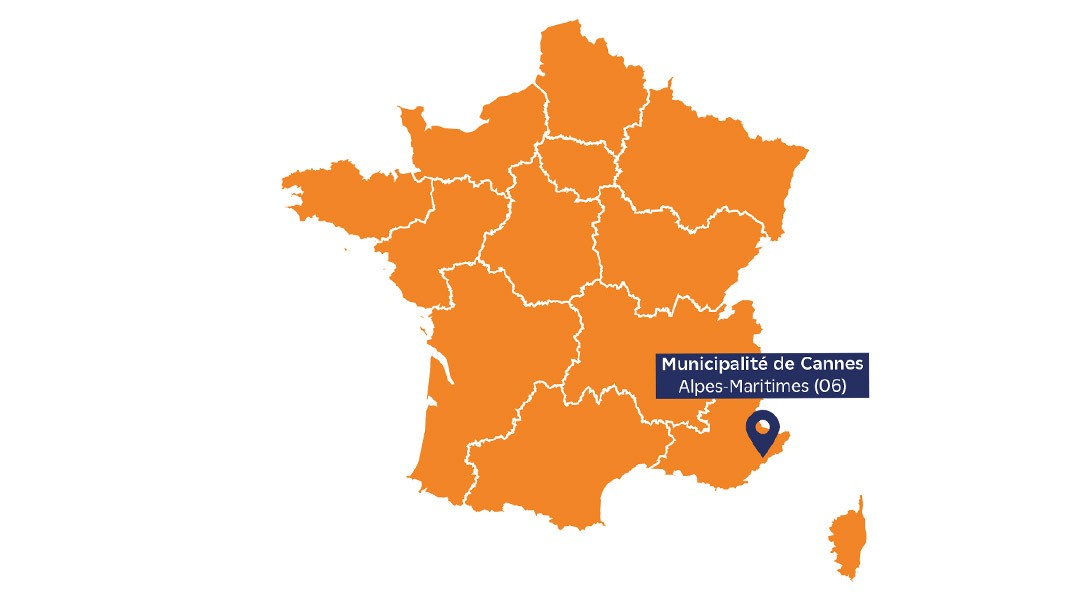
Project location
Our partners

About the partners
Hynamics is a subsidiary of the EDF Group that offers a turnkey solution to the industrial and mobility sectors for the production, storage and distribution of low-carbon and renewable hydrogen. It manages the investment, operation and maintenance of production and distribution facilities. Hynamics targets the sectors with the highest CO₂ emissions – industry and transport – and is involved in the production of sustainable aviation fuels (SAF). Low-carbon, renewable hydrogen is produced by water electrolysis, a technology that emits no CO₂ when the electricity used comes from decarbonised sources. In France, Hynamics operates five stations dedicated to heavy-duty transport. To follow our news, visit our LinkedIn Hynamics page.
La Banque des Territoires is one of the business lines of Caisse des Dépôts. It brings together internal expertise dedicated to regional development. Acting as a single point of contact for its clients, it works alongside all regional stakeholders: local authorities, local public enterprises, social housing organisations, legal professionals, businesses and financial institutions. It supports them in carrying out their projects of general interest by offering a range of solutions: advice, loans, equity investments, escrow services and banking services. By serving all regions, from rural areas to major cities, the Banque des Territoires aims to maximise its impact, particularly in the areas of ecological transition and social and territorial cohesion. The Banque des Territoires’ 37 local offices ensure that its activities are rolled out across all metropolitan and overseas territories. Working together to develop greener and more inclusive regions.
The Climate, Infrastructure and Environment Agency (CINEA) assists the European Commission in implementing the EU’s main programmes aimed at an ecological and sustainable transition. Through the effective implementation of its delegated programmes, CINEA contributes to economic development in the EU by strengthening competitiveness and protecting the environment. Over the period 2021–2027, CINEA manages around €65 billion in European funds, including €25.8 billion under the Connecting Europe Facility, to support sustainable transport infrastructure projects.
L’ADEME - At the heart of the remit entrusted to it by the Ministry for Ecological Transition, the Ministry for Energy and the Ministry for Research, ADEME – the Agency for Ecological Transition – shares its expertise and provides funding and support for transformation projects across a range of sectors: energy, the circular economy, decarbonisation of industry, mobility, construction, air quality, responsible consumption and production, sustainable food, the bioeconomy, land management, climate change adaptation and a just transition. ADEME engages citizens, businesses and local authorities to help them move towards a low-carbon, resource-efficient society. Firmly committed to combating climate change and resource degradation, it advises, facilitates and supports initiatives, from research to the dissemination of solutions. As a public industrial and commercial establishment (EPIC), ADEME also puts its expertise and foresight at the service of public policy. www.ademe.fr